Skip to content

鳴梁海戰

The Strait of Myeongnyang

Admiral Yi Sun-sin, 1597 · 26 October 1597

Thirteen ships against more than a hundred. Yi Sun-sin lets the narrow channel and the turning current do what numbers never could.

Joseon navy
13 ships
Japanese fleet
133 warships

Strategy made visible

The battle, beat by beat

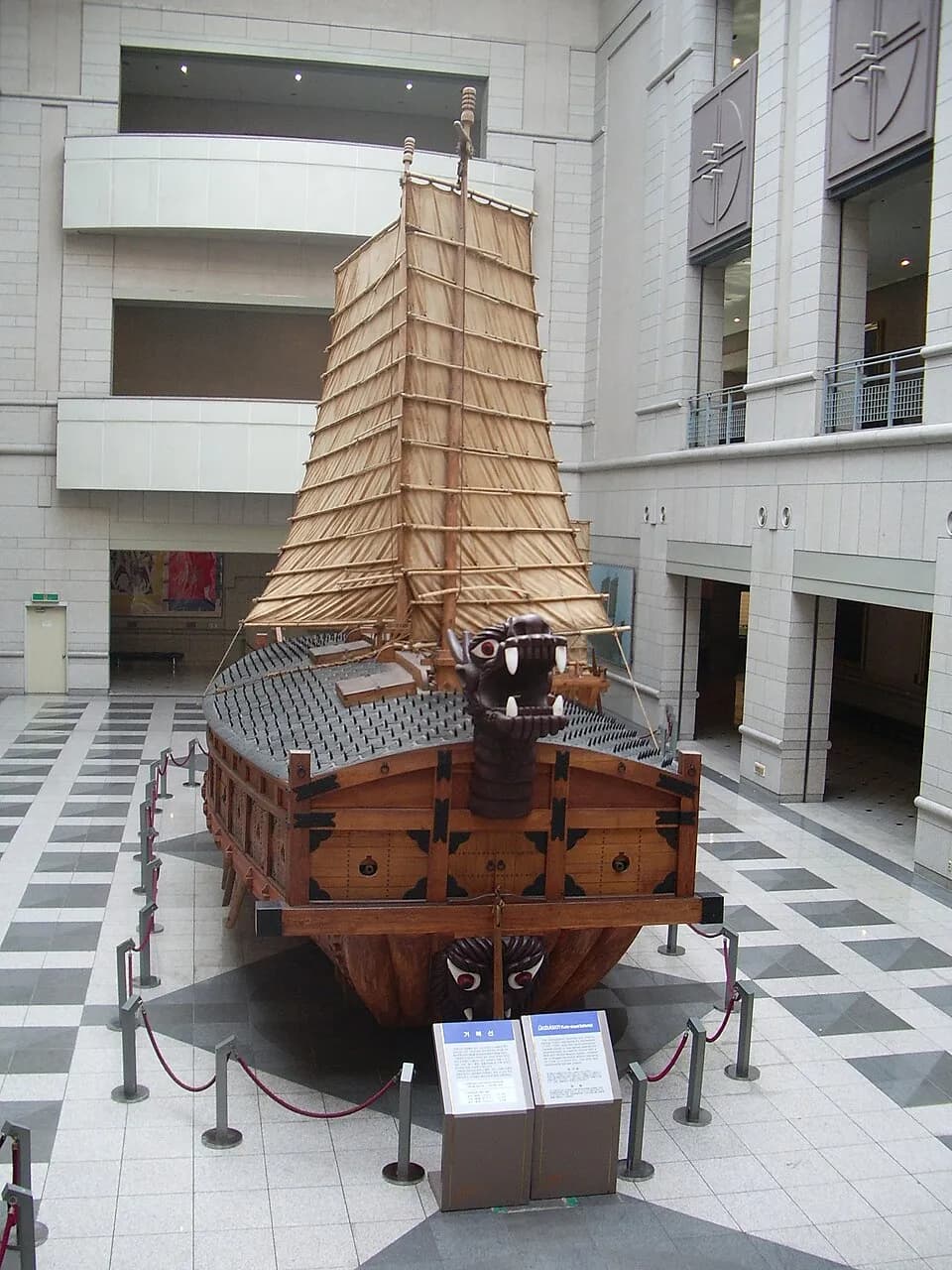
Numbers vary by source: Joseon accounts give thirteen ships against about one hundred and thirty-three. No turtle ships fought here; they were lost at Chilcheollyang.

Joseon navy Japanese fleetUse ← → to step through

Beat 1 of 6

Twelve ships

Weeks earlier the Joseon navy was annihilated at Chilcheollyang. Reinstated, Yi Sun-sin gathers what is left: about thirteen panokseon. Told to abandon the sea, he writes to the king that he still has twelve ships.

The lesson

Choose ground where numbers do not count. In a channel only so wide, the enemy can bring only so many ships to bear, and the tide does the rest.

The shot

“Korean ships holding a churning strait, the tide reversing, a fleet folding in on itself.”

Logline. Thirteen ships hold a strait where numbers do not count, until the sea itself changes sides.

Target runtime
2 min 30 sec
Palette
Score
Korean buk drums and a slow haegeum line; the tide gets its own sound.

Historical beat sheet

What really happened

The script follows these beats. Where the novel or later legend embellishes, the reenactment says so.

  1. 01

    Twelve ships

    Weeks earlier the Joseon navy was annihilated at Chilcheollyang. Reinstated, Yi Sun-sin gathers what is left: about thirteen panokseon. Told to abandon the sea, he writes to the king that he still has twelve ships.

  2. 02

    Choosing the strait

    Yi will not meet more than a hundred warships in open water. He chooses Myeongnyang, where the channel narrows to a few hundred metres and the tidal current races. Only a few enemy ships can come at him at once.

  3. 03

    The flagship holds alone

    The Japanese ride the current into the strait. The other Joseon captains hang back in fear. Yi's flagship advances alone, anchors in the channel, and holds, firing cannon and arrows into ship after ship.

  4. 04

    A commander falls

    The Japanese commander Kurushima Michifusa is killed and his body hauled from the water; Yi has it hung from the mast. Shamed and rallied, the other Joseon ships join the fight.

  5. 05

    The tide turns

    Around midday the current reverses and now runs against the attackers. Packed into the narrows, the Japanese ships collide and foul one another, unable to manoeuvre or bring their numbers to bear.

  6. 06

    The fleet withdraws

    The Japanese fleet breaks off and retreats. Joseon records count thirty-one enemy ships destroyed; not one Joseon ship is lost. The sea route to the west is held.

Production plan

The shot list

The director's plan for the generative video pipeline: what each shot is, how the camera moves, and the prompt that guides the model.

In production · plan, not finished footage

  1. 01

    Aerial

    Lens
    20 mm
    Motion
    Descend over the whirlpools of the strait
    Duration
    8 s

    Generation prompt

    Aerial view of a narrow sea strait between rocky shores with fast swirling tidal currents and whirlpools, morning light. East Asian ink-wash aesthetic, sumi-e textures, rice-paper grain, restrained palette of ink black, vermilion and bronze, cinematic lighting, 24fps film look
  2. 02

    Wide

    Lens
    28 mm
    Motion
    Static as a single ship moves forward alone
    Duration
    8 s

    Generation prompt

    A single large Korean panokseon warship advances alone into a channel filled with dozens of enemy ships, its companions hanging back behind it. East Asian ink-wash aesthetic, sumi-e textures, rice-paper grain, restrained palette of ink black, vermilion and bronze, cinematic lighting, 24fps film look

  3. 03

    Medium

    Lens
    40 mm
    Motion
    Handheld on deck amid cannon smoke
    Duration
    6 s

    Generation prompt

    On the deck of a wooden Korean warship, an admiral in armor stands unmoving among cannon smoke and arrows, giving orders. East Asian ink-wash aesthetic, sumi-e textures, rice-paper grain, restrained palette of ink black, vermilion and bronze, cinematic lighting, 24fps film look

  4. 04

    Overhead, annotated

    Lens
    Top-down
    Motion
    Time-lapse as the current reverses
    Duration
    10 s

    Generation prompt

    Top-down view of a crowded fleet in a narrow strait as the tidal current reverses direction, ships turning sideways and colliding, foam lines curling the other way. East Asian ink-wash aesthetic, sumi-e textures, rice-paper grain, restrained palette of ink black, vermilion and bronze, cinematic lighting, 24fps film look

From the canon

The passages behind the move

今臣戰船 尙有十二

“Your servant still has twelve warships.”
Nanjung Ilgi, the War Diary, Memorial to King Seonjo, 1597Tr. Yi Sun-sin

必死則生,必生則死。

“Those who are resolved to die shall live; those who seek to live shall die.”
Nanjung Ilgi, the War Diary, Address before Myeongnyang, 1597Tr. Yi Sun-sin

水因地而制流,兵因敵而制勝。故兵無常勢,水無常形。

“Water shapes its course according to the nature of the ground over which it flows; the soldier works out his victory in relation to the foe whom he is facing. Therefore, just as water retains no constant shape, so in warfare there are no constant conditions.”
The Art of War, 6.31–32Tr. Lionel Giles (1910)

投之無所往,死且不北。

“Throw your soldiers into positions whence there is no escape, and they will prefer death to flight.”
The Art of War, 11.23Tr. Lionel Giles (1910)

Companion episode

In the season arc

The narrated episode for this scene is still being recorded. Listen to the published episodes while you wait.

Go to the podcast