Skip to content

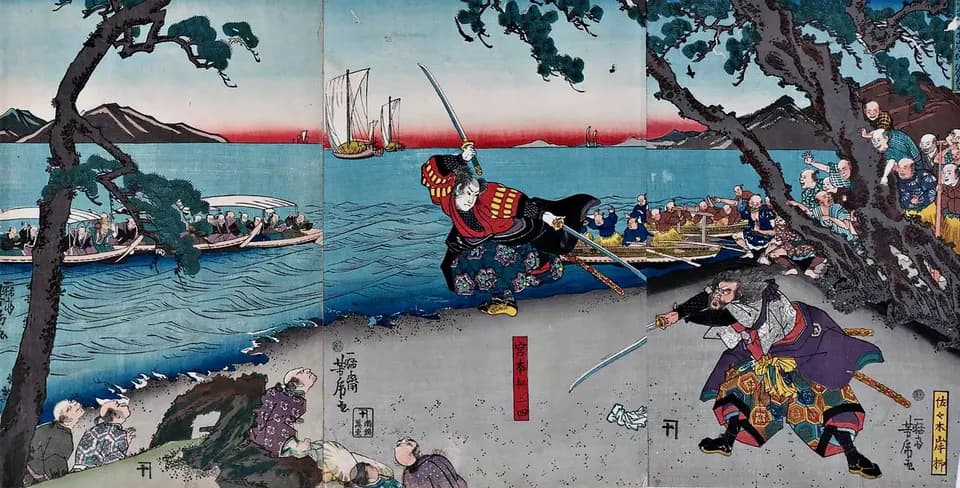
巌流島の決闘

The Duel at Ganryu Island

Miyamoto Musashi, 1612 · 13 April 1612

Musashi arrives late on purpose, rattles the finest swordsman in Japan, and wins with a blade carved from a wooden oar. Technique loses to timing.

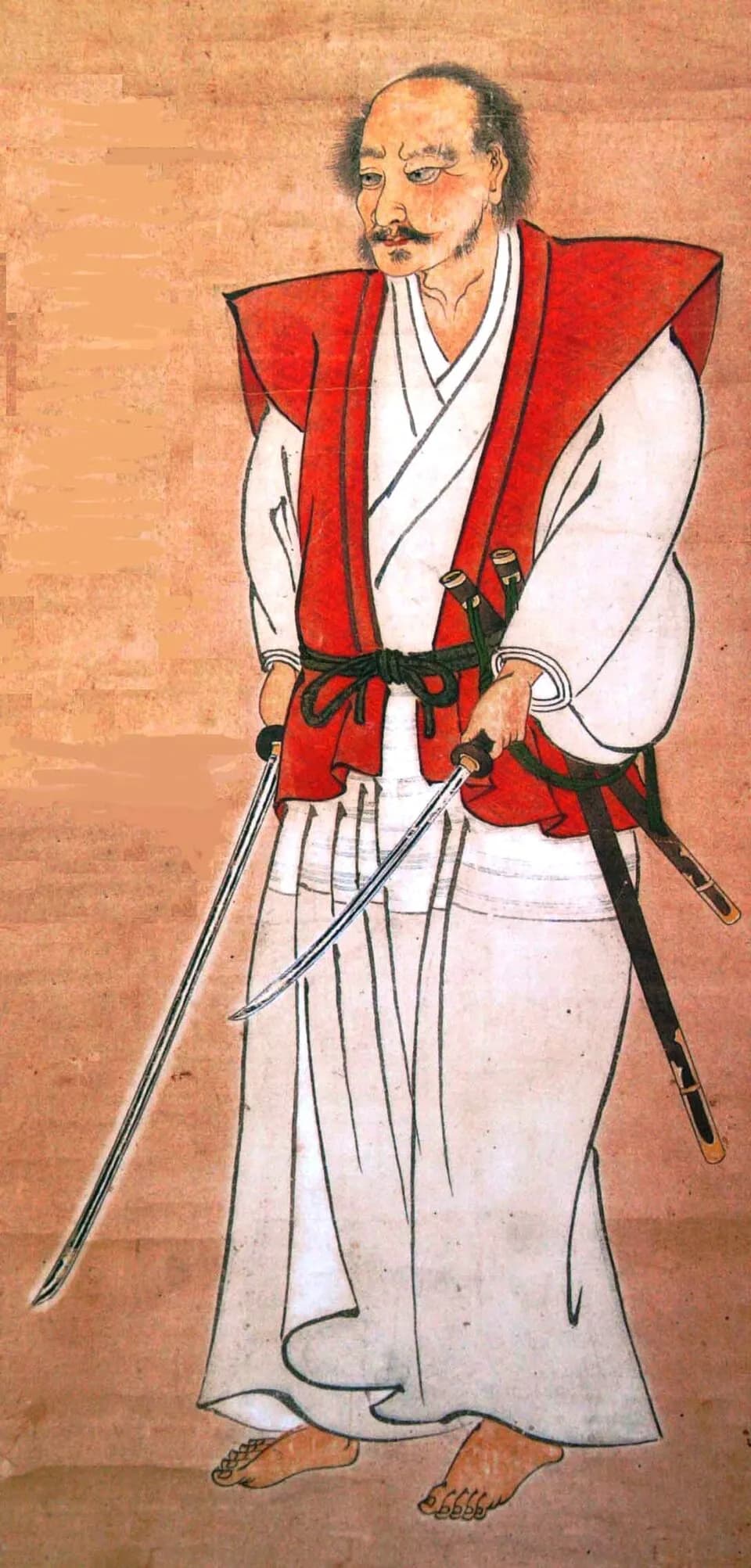
Miyamoto Musashi
a wooden oar
Sasaki Kojiro
the Drying Pole, a three-foot nodachi

Strategy made visible

The battle, beat by beat

The most detailed accounts of the duel were written well over a century later. Details like the oar and the scabbard are part of the legend, and historians treat them with caution.

Miyamoto Musashi Sasaki KojiroUse ← → to step through

Beat 1 of 6

The appointed hour

Morning, 13 April 1612. On a small island in the strait, Sasaki Kojiro, master of the long blade, waits with officials of the Hosokawa domain. The hour passes. Musashi has not come.

The lesson

Fight the opponent's mind before you fight his sword. Disturb his rhythm, and his skill works against him.

The shot

“Two figures on a dawn tide-flat, a long oar-sword catching the light, one strike that decides everything.”

Logline. The finest swordsman in Japan is beaten before the first blow.

Target runtime
1 min 40 sec
Palette
Score
Wind, surf, and silence; a single shakuhachi phrase after the strike.

Historical beat sheet

What really happened

The script follows these beats. Where the novel or later legend embellishes, the reenactment says so.

  1. 01

    The appointed hour

    Morning, 13 April 1612. On a small island in the strait, Sasaki Kojiro, master of the long blade, waits with officials of the Hosokawa domain. The hour passes. Musashi has not come.

  2. 02

    Late, by design

    Musashi is rowed across hours late. In the boat, legend says, he carves a wooden sword from a spare oar, longer than Kojiro's famous blade.

  3. 03

    The scabbard

    Musashi steps into the shallows. Furious, Kojiro draws and flings his scabbard into the sea. Musashi calls out that he has already lost: a man who expects to live does not throw away his scabbard.

  4. 04

    One exchange

    They close. Kojiro's cut slices the cloth tied around Musashi's head. Musashi's longer oar comes down on Kojiro's skull in the same instant.

  5. 05

    The fall

    Kojiro falls. Musashi checks his breathing, bows to the officials, and returns to his boat.

  6. 06

    Departure

    The boat pulls away into the strait. Musashi will later write that he did not truly understand strategy until after his duels, when he was past fifty.

Production plan

The shot list

The director's plan for the generative video pipeline: what each shot is, how the camera moves, and the prompt that guides the model.

In production · plan, not finished footage

  1. 01

    Wide

    Lens
    24 mm
    Motion
    Static; a lone swordsman paces
    Duration
    7 s

    Generation prompt

    A samurai with a very long sword paces impatiently on a small island beach in morning light, officials waiting under a canopy. East Asian ink-wash aesthetic, sumi-e textures, rice-paper grain, restrained palette of ink black, vermilion and bronze, cinematic lighting, 24fps film look
  2. 02

    Close-up

    Lens
    85 mm
    Motion
    Slow push on hands carving
    Duration
    5 s

    Generation prompt

    Close-up of hands carving a long wooden sword from a boat oar with a short blade, wood shavings falling into a rowing boat. East Asian ink-wash aesthetic, sumi-e textures, rice-paper grain, restrained palette of ink black, vermilion and bronze, cinematic lighting, 24fps film look

  3. 03

    Medium

    Lens
    50 mm
    Motion
    Slow motion as a scabbard hits the water
    Duration
    4 s

    Generation prompt

    A lacquered scabbard spins through the air and splashes into the shallow surf, slow motion, droplets catching the sun. East Asian ink-wash aesthetic, sumi-e textures, rice-paper grain, restrained palette of ink black, vermilion and bronze, cinematic lighting, 24fps film look

  4. 04

    Wide, profile

    Lens
    35 mm
    Motion
    Locked off for the single exchange
    Duration
    4 s

    Generation prompt

    Two swordsmen in profile on a tidal flat at dawn, one with a long wooden oar-sword, a single simultaneous strike, a headband fluttering free. East Asian ink-wash aesthetic, sumi-e textures, rice-paper grain, restrained palette of ink black, vermilion and bronze, cinematic lighting, 24fps film look

From the canon

The passages behind the move

“There is timing in everything. Learn the rhythm of the opponent, then do what he does not expect: when he is hurried, be slow; when he waits, move. To win is to disturb his rhythm while keeping your own.”
The Book of Five Rings, Fire scroll, on timingParaphrase of Musashi (1645)
“Let your gaze be broad. There is perception and there is sight: perception is strong, sight is weak. See distant things as if they were close and close things as if they were distant.”
The Book of Five Rings, Water scroll, on the gazeParaphrase of Musashi (1645)
“Put yourself in the enemy's position. Seen from inside, a fortified opponent is often weaker and more afraid than he looks from outside.”
The Book of Five Rings, Fire scroll, to become the enemyParaphrase of Musashi (1645)

Companion episode

In the season arc

The narrated episode for this scene is still being recorded. Listen to the published episodes while you wait.

Go to the podcast