Skip to content

Confucianism · China

The Analects

論語

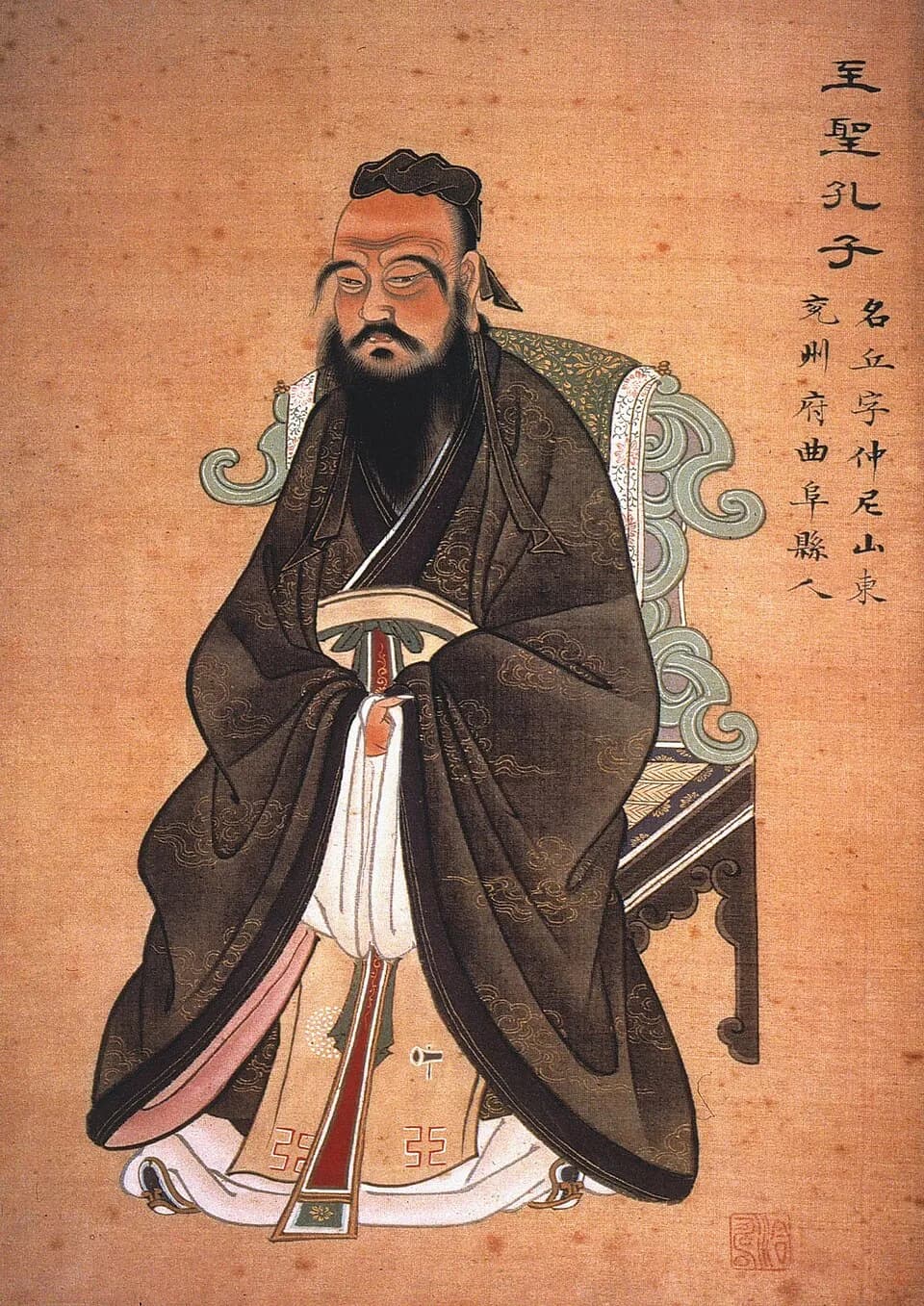
Confucius (Kongzi) · c. 5th century BCE

The ethical operating system of half the world.

The recorded sayings of Confucius on virtue, ritual, and the cultivated person.

The essence

What it is really about

Confucius believed that a good society is built from good people, and that goodness is learned. The Analects is a portrait of a teacher in conversation: short exchanges, often only a line or two, about how to treat parents, friends, rulers, and strangers, and how to become the kind of person others can trust.

Historical context

Where it came from

Confucius lived in the state of Lu during the late Spring and Autumn period, a time when the old Zhou order was collapsing. He held minor office, travelled for years seeking a ruler who would listen, and returned home to teach. His students compiled the Analects over generations after his death in 479 BCE. In the Han dynasty it became the core of education, and later the basis of civil service examinations across China, Korea, and Vietnam.

Key ideas

The concepts to carry with you

  • Ren, humaneness

    The highest virtue: genuine care for others, practiced in every relationship.

  • Li, ritual propriety

    The forms and courtesies that give care a shape. Ritual trains the heart by training the hands.

  • Junzi, the exemplary person

    Originally a prince; for Confucius, anyone who has cultivated themselves into a person of integrity.

  • Xiao, filial piety

    Reverence for parents, the root from which all other virtues grow.

In the deep dive

  • Ren, li, and the junzi, explained in plain language
  • Why a 2,500-year-old idea of self-cultivation still holds up

Living translations

Read it in the original

Each passage is cited and credited. Classical lines open character by character: the reading, the sense, and what is hiding inside a single character. Paraphrases are marked where the best translations are still under copyright.

  1. 01

    1.1

    Translation
    Reading mode

    ,?,?,?

    Hover, focus, or tap a character for its reading and sense.

    Is it not pleasant to learn with a constant perseverance and application? Is it not delightful to have friends coming from distant quarters? Is he not a man of complete virtue, who feels no discomposure though men may take no note of him?
    Translated by James Legge (1861)learningfriendshiprecognitionjunzi
  2. 02

    1.2

    Translation
    Reading mode

    ,。,!

    Hover, focus, or tap a character for its reading and sense.

    The superior man bends his attention to what is radical. That being established, all practical courses naturally grow up. Filial piety and fraternal submission! Are they not the root of all benevolent actions?
    Translated by James Legge (1861)familyfilial pietyrenparents
  3. 03

    2.4

    Translation
    Reading mode

    ,,,,,,。

    Hover, focus, or tap a character for its reading and sense.

    At fifteen, I had my mind bent on learning. At thirty, I stood firm. At forty, I had no doubts. At fifty, I knew the decrees of Heaven. At sixty, my ear was an obedient organ for the reception of truth. At seventy, I could follow what my heart desired, without transgressing what was right.
    Translated by James Legge (1861)growthageself-cultivationlife
  4. 04

    2.7

    Translation
    Reading mode

    ,。,;,?

    Hover, focus, or tap a character for its reading and sense.

    The filial piety of nowadays means the support of one's parents. But dogs and horses likewise are able to do something in the way of support; without reverence, what is there to distinguish the one support given from the other?
    Translated by James Legge (1861)familyparentsfilial pietyrespect
  5. 05

    2.11

    Translation
    Reading mode

    ,。

    Hover, focus, or tap a character for its reading and sense.

    If a man keeps cherishing his old knowledge, so as continually to be acquiring new, he may be a teacher of others.
    Translated by James Legge (1861)learninghistoryteachingtradition
  6. 06

    2.15

    Translation
    Reading mode

    ,。

    Hover, focus, or tap a character for its reading and sense.

    Learning without thought is labour lost; thought without learning is perilous.
    Translated by James Legge (1861)learningthinkingstudyschool
  7. 07

    2.17

    Translation
    Reading mode

    ,,。

    Hover, focus, or tap a character for its reading and sense.

    When you know a thing, to hold that you know it; and when you do not know a thing, to allow that you do not know it; this is knowledge.
    Translated by James Legge (1861)honestyknowledgehumilitylearning
  8. 08

    4.16

    Translation
    Reading mode

    ,。

    Hover, focus, or tap a character for its reading and sense.

    The mind of the superior man is conversant with righteousness; the mind of the mean man is conversant with gain.
    Translated by James Legge (1861)ethicsmoneyjunzicharacter
  9. 09

    4.17

    Translation
    Reading mode

    ,。

    Hover, focus, or tap a character for its reading and sense.

    When we see men of worth, we should think of equaling them; when we see men of a contrary character, we should turn inwards and examine ourselves.
    Translated by James Legge (1861)self-reflectionrole modelsenvycomparison
  10. 10

    7.22

    Translation
    Reading mode

    ,。,。

    Hover, focus, or tap a character for its reading and sense.

    When I walk along with two others, they may serve me as my teachers. I will select their good qualities and follow them, their bad qualities and avoid them.
    Translated by James Legge (1861)learninghumilityfriendshipteachers
  11. 11

    9.28

    Translation
    Reading mode

    ,。

    Hover, focus, or tap a character for its reading and sense.

    When the year becomes cold, then we know how the pine and the cypress are the last to lose their leaves.
    Translated by James Legge (1861)adversitycharacterresiliencefailure
  12. 12

    12.11

    Translation
    Reading mode

    ,,,。

    Hover, focus, or tap a character for its reading and sense.

    There is government, when the prince is prince, and the minister is minister; when the father is father, and the son is son.
    Translated by James Legge (1861)rolesgovernancefamilyorder
  13. 13

    15.24

    Translation
    Reading mode

    !,。

    Hover, focus, or tap a character for its reading and sense.

    Is not reciprocity such a word? What you do not want done to yourself, do not do to others.
    Translated by James Legge (1861)reciprocityethicsgolden rulerelationships
  14. 14

    15.21

    Translation
    Reading mode

    ,。

    Hover, focus, or tap a character for its reading and sense.

    What the superior man seeks, is in himself. What the mean man seeks, is in others.
    Translated by James Legge (1861)responsibilityself-relianceblamejunzi

A modern translation

Why it still matters

Strip away the robes and The Analects is a manual for character: practice, reflect, admit what you do not know, and treat people the way you would want to be treated. It is the most quietly influential self-improvement book ever written.

Map it onto your own decision

Go a layer deeper